The round reserve: the timeless classic
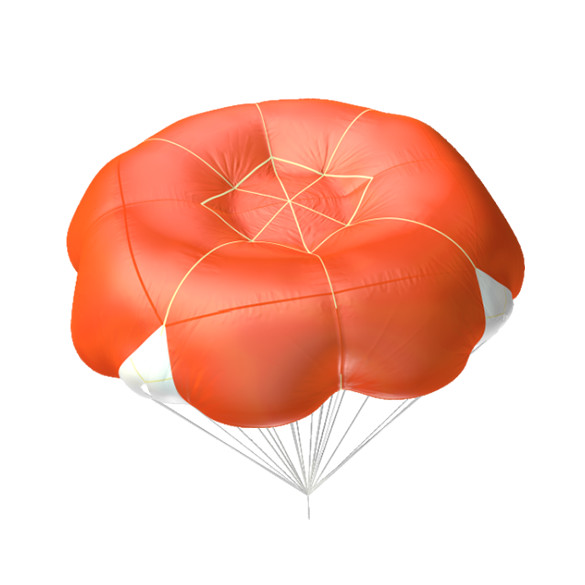
Its circular shape provides a fast, predictable opening. Ideal for flying in cluttered environments or pilots who want straightforward behavior, it remains the reference for those prioritizing mechanical reliability over trajectory control. Initial deployment can cause a slight stall, but once fully inflated, it stabilizes and flies straight. This model suits local flying, training courses, and pilots who prefer keeping their hands free to manage their immediate surroundings.
The square reserve: the current standard
It is now the standard for high-altitude flying and competitions. Its elongated shape allows better air penetration and finer control during deceleration. Deployment is generally smoother, reducing stress on the harness and wing. If you do bivouacs, high-mountain flying, or long-distance flights, it stands out for its braking efficiency and dome stability. Packing requires more discipline.
The steerable reserve: for precision
Fitted with active steering lines, it allows trajectory adjustment during landing. It is not a navigation system but a compensation tool for constrained impact zones. It requires terrain reading on approach and regular training. Restricted to experienced pilots who know their limits and the actual maneuvering margins of the equipment.
Safety margins and ground reality
The choice depends on daily use, not technical specs. Stay cautious and progressive in your decision. Systematically check the weather, gear condition, actual skill level, and fatigue. A well-chosen reserve does not compensate for a rough flight assessment. Always seek personalized advice and maintain realistic safety margins. Packing, inspection, and storage are integral parts of the safety chain.
- Prioritize a reserve with an opening speed that matches your flying pace.
- Verify compatibility with the harness and deployment handles.
- Factor in total weight and thermal conditions into your planning.
In-flight safety relies on decisions made before takeoff. Match your selection to your flying style, follow procedures, and never neglect maintenance.
Fly safe,
Cyrille MARCK and the Rid'Air/CEM team