Le Vol en Hiver : Maîtriser l'Aérologie Stable et le Matériel par Grand Froid

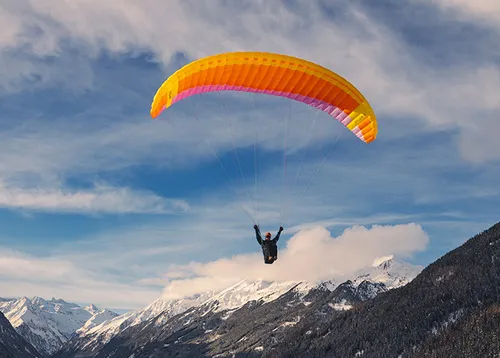
Quand la neige recouvre les décollages, une ambiance feutrée s'installe sur nos sites. Si beaucoup de pilotes rangent leur voile au garage, l'hiver offre pourtant des conditions d'une pureté exceptionnelle. Mais attention, voler en hiver ne s'improvise pas : entre la densité de l'air accrue et la gestion de l'hypothermie, le pilote doit adapter sa technique.
1. La Physique de l'Air Froid : Une Portance Boostée
Le premier phénomène que vous ressentirez en volant par -5°C, c’est que votre aile \"porte\" mieux. Pourquoi ? C’est une question de densité moléculaire. L’air froid est plus dense que l’air chaud. Pour un même volume, il y a plus de molécules d'air sous votre extrados et dans votre profil.
- Conséquence au décollage : Votre voile monte plus lentement mais vous porte plus tôt. La prise en charge est souvent plus efficace.
- Conséquence en vol : À vitesse égale, votre taux de chute peut sembler légèrement amélioré, mais votre vitesse sol sera plus faible car l'air oppose une résistance plus grande.
2. L'Aérologie Hivernale : Entre Stabilité et Brises de Pente
En hiver, le soleil est bas. L'angle d'incidence des rayons sur le relief est faible, ce qui limite le déclenchement des thermiques puissants. On parle souvent de \"stabilité hivernale\".
L'Inversion de Température
C’est le piège classique : il fait plus doux à 1500m qu'en vallée. Cette couche d'air chaud bloque les polluants et l'humidité au sol, créant une mer de nuages ou une brume tenace. Pour le pilote, cela signifie une absence totale de convection au-dessus de l'inversion. Le vol sera un long \"plouf\" calme, mais d'une sérénité absolue.
La Brise de Neige
Attention aux zones d'ombre ! La neige reflète énormément l'énergie solaire (albédo). Cela signifie que les faces rocheuses chauffent un peu, mais que les champs enneigés restent glacés. Vous pouvez rencontrer des micro-brises descendantes très marquées au-dessus des zones blanches, car l'air refroidi par la neige \"coule\" littéralement vers le bas.
3. Préserver son Matériel
Le froid impacte aussi votre équipement. Le tissu de votre aile (le Nylon 6.6) devient plus rigide. Évitez absolument de plier votre voile si elle est humide ou si du givre s'est formé : les cristaux de glace sont abrasifs et peuvent endommager l'enduction du tissu lors du pliage serré.
- Batteries : Vos instruments perdent 30 à 50% de leur autonomie par grand froid. Gardez votre téléphone et votre vario contre votre corps jusqu'au dernier moment.
- L'humidité : Si vous posez dans la neige, séchez votre voile à plat chez vous. Ne la laissez jamais dans un sac de compression humide, sous peine de voir apparaître des moisissures ou une porosité prématurée.