Varios et GPS : Comment choisir l'instrument adapté à votre pratique ?
En parapente, l’instrumentation n’est pas là pour piloter à votre place, mais pour prolonger vos sens. Que vous soyez en phase d'initiation, mordu de \"marche et vol\" ou compétiteur acharné, le choix entre un simple bip-bip et une centrale de vol complexe modifie radicalement votre gestion de l'effort mental en l'air.
1. Le Vario Sonore (Le \"Bip-Bip\") : L'instinct pur
C'est l'appareil minimaliste par excellence. Il utilise un capteur de pression haute précision (MEMS) pour traduire les variations de pression atmosphérique en signaux sonores. Plus vous montez vite, plus la fréquence des bips s'accélère.
- Pourquoi l'utiliser : Pour ne pas polluer votre champ visuel. C'est l'outil idéal pour les débutants qui doivent garder les yeux sur leur voile et leur environnement, ou pour les adeptes du Hike & Fly ultra-léger.
- Le point technique : Un bon vario doit avoir un \"temps d'intégration\" réglable pour éviter de biper à chaque coup de tangage, tout en restant assez réactif pour marquer l'entrée dans le thermique.
2. Le Vario-GPS combiné : Le couteau suisse
C'est aujourd'hui le standard. En plus de la pression, l'appareil intègre une puce GPS. Cela permet de calculer votre vitesse sol (Ground Speed), une donnée vitale pour comprendre l'influence du vent.
- Vario Solaire : Des appareils comme le Mipbip s'auto-alimentent. Finie la panne de batterie au sommet du déco !
- Analyse de la dérive : Le GPS permet de visualiser votre trace. Si vous tournez un thermique et que votre trace ressemble à une spirale étirée, vous visualisez instantanément la force et la direction du vent.
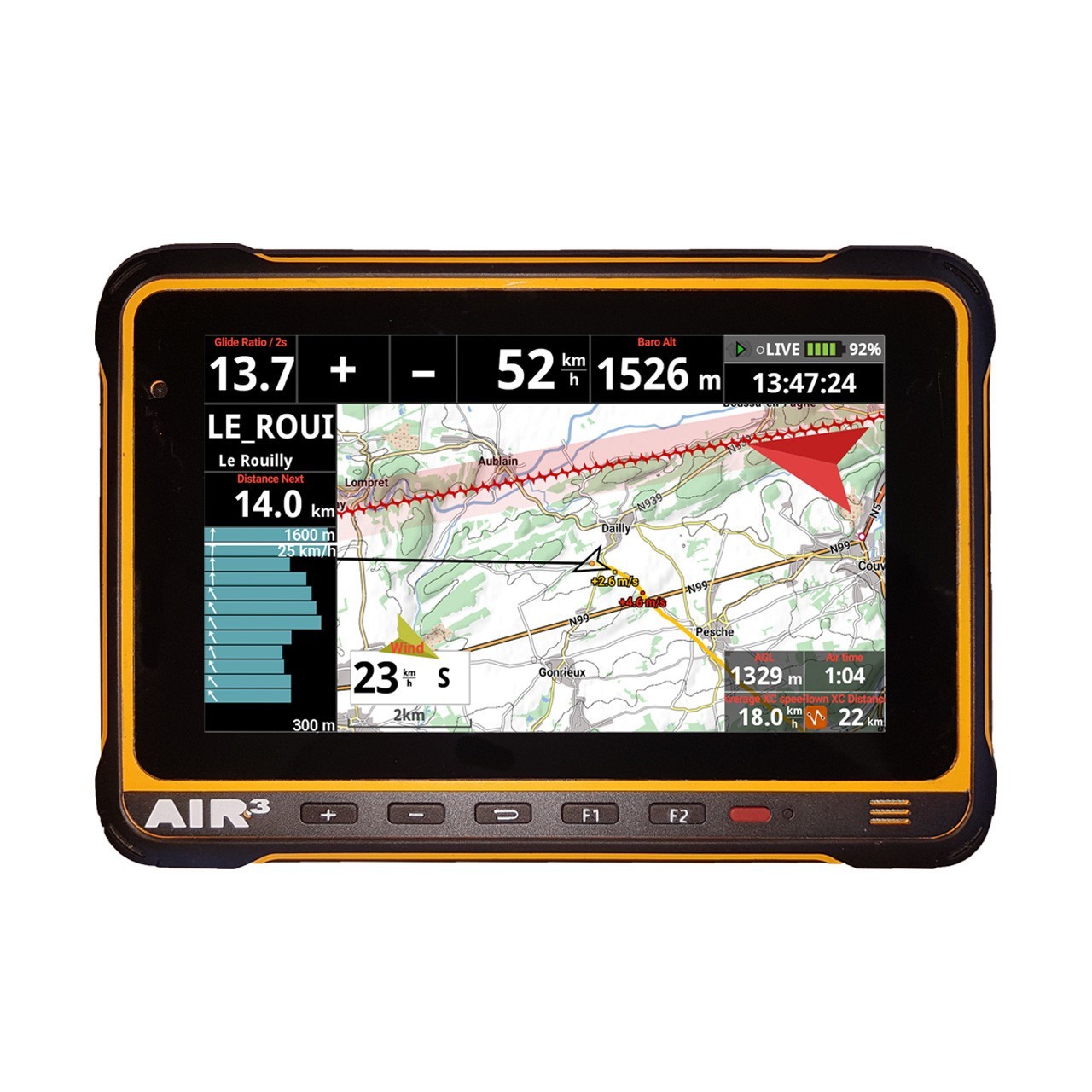
3. Les Tablettes et Instruments de Compétition
Ici, on entre dans le domaine de la performance pure. Ces appareils offrent des écrans larges (souvent à encre électronique E-ink pour une lisibilité parfaite au soleil) et gèrent des espaces aériens complexes.
Le calcul du Glide (Finesse sol)
C'est la fonction cruciale pour le cross. L'appareil calcule en temps réel si, avec votre altitude actuelle et le vent de face, vous pouvez franchir la prochaine crête ou atteindre l'atterrissage. C'est votre filet de sécurité mathématique.
Synthèse : Quel outil pour quel pilote ?
- Débutant / Vol local : Un vario sonore simple ou un petit combiné solaire (type Vario LS ou Mipbip).
- Pilote de Cross : Un vario-GPS avec cartographie des espaces aériens (type Air3).
- Hike & Fly : Le gain de poids est la priorité. Un petit GPS solaire léger fixé sur l'élévateur est parfait.
Bons vols, Cyrille MARCK - Rid'Air