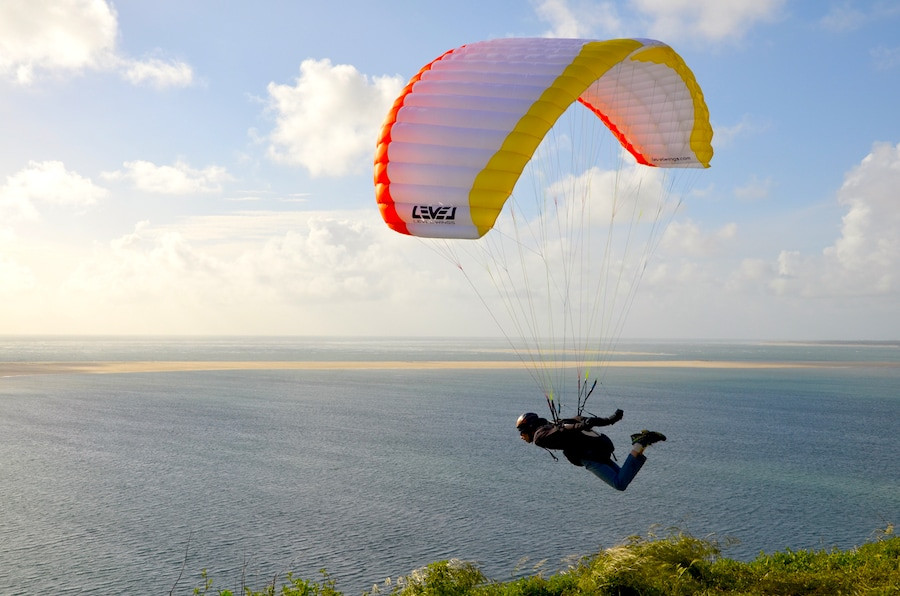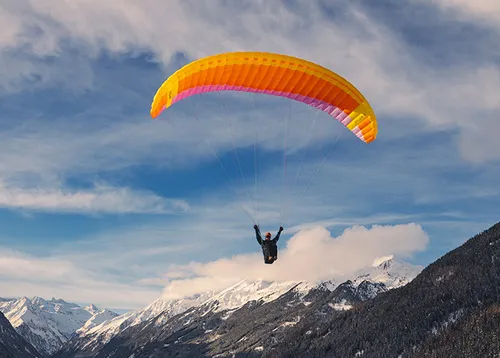
The context: when the sky gets busy
When lift is strong and everyone else is climbing, the urge to follow fits in. Field experience reminds us of a simple truth: progression requires concrete actions and discipline, not emotions. Before attempting any maneuver, check local weather, gear condition, your actual skill level and fatigue. Safety isn't negotiable; it's built with healthy margins and distance from the crowd. Following the flock never replaces reading the sky yourself.
Dopeys: slowing the climb without panic
Using dopeys remains one of the most reliable ways to descend without chasing performance. The goal isn't speed, but regaining control smoothly. Apply the maneuver progressively, keep your arms relaxed and look at the horizon instead of straight down. If the wing responds poorly or tension rises, ease off gently and reassess. Field advice is straightforward: a controlled descent beats a rushed landing every time.
Accelerator and plan B: anticipating to avoid reacting
The accelerator reduces incidence and helps cross areas of overly strong lift. Full trim or max acceleration changes the wing's geometry and increases stall risks if pushed too far. Know your limits before engaging it. A plan B isn't an afterthought; it's the foundation of responsible flying. Identify landing zones in advance and keep maneuvering room. Stress drops when you've already planned your exit.
Pace management and field awareness
Whether it's a thermal, forced lift or just wing overheating, rapid ascent can mask a gradual loss of control. The golden rule applies both on launch and in the air: seek personalized advice, check your physical state and avoid altitude races. Successful piloting relies on repeating basic actions, not improvising strategies. When everything around you climbs, choosing to go down voluntarily usually marks a pilot with experience and sound judgment.
- Check weather and air mass developments
- Inspect gear and risers before every launch
- Adjust speed to your skill level and fatigue
Final check: never sacrifice safety margins to keep up with the pack. Focus on real indicators, not group pressure.
Fly safe,
Cyrille MARCK and the Rid'Air/CEM team