Mountain weather demands rigor
General forecasts are not enough in these regions. Three classic traps consistently appear on ridges and in valleys, regardless of the season. Identifying them does not replace direct observation, but it helps avoid critical situations.
1. The Venturi effect: channel acceleration
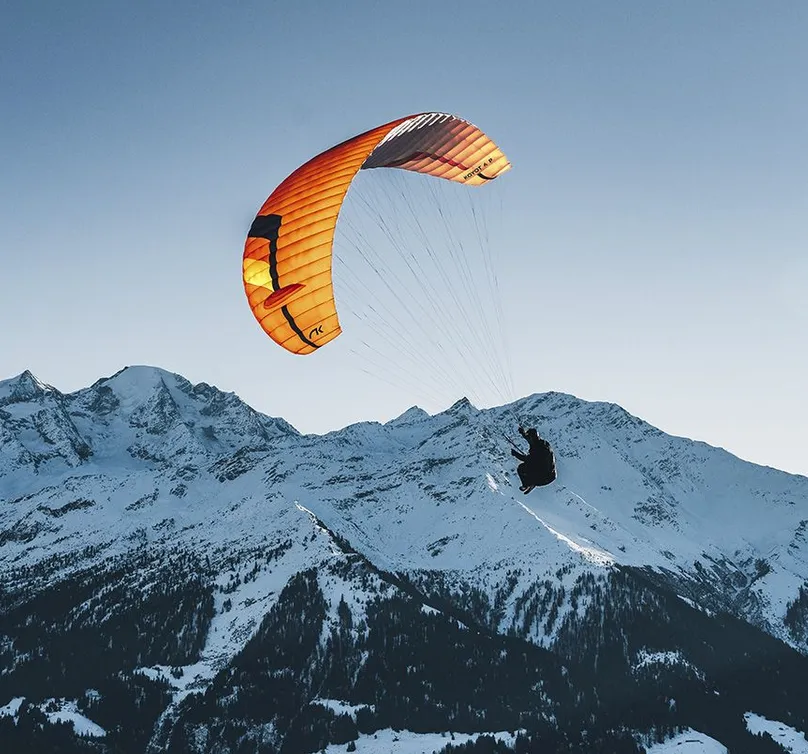
Regional airflow funnels through passes and narrow valleys, gaining speed through compression. In slope or ridge flying, this creates irregular thermals, mechanical turbulence, and deceptive visibility. The rule: always check wind direction and intensity before committing. Strong cross-valley winds accelerate immediately, making ground handling and in-flight maneuvers riskier.
2. Thermal overdevelopment: instability
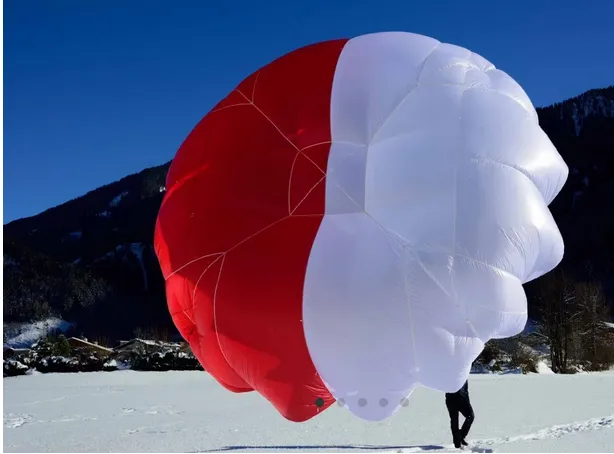
Under high pressure, south-facing slopes and enclosed cirques trap heat. Air becomes saturated, stagnates, and eventually releases energy through localized storms, sudden downdrafts, and lateral instability. Flattened dome-shaped cumulus or rapidly rising clouds signal saturation. Do not confuse this with a good thermal day. The rule is straightforward: monitor cloud development and limit high-altitude commitments.
3. Foehn: deceptive visibility and rotors
This hot, dry wind descending from Alpine or Pyrenean slopes clears clouds and offers exceptional visibility. That calm appearance hides mechanical reality: persistent turbulence, waves, and unpredictable rotors. Foehn shifts conditions quickly, turning stable slopes into high-shear zones. Vigilance requires tracking the snowline and reading the terrain before launch.
Check, progress, respect your margins
Risk management in mountains relies on rigor. Before every session, check local weather, gear condition, actual skill level, and fatigue. Mountains make no distinction between beginners and overconfident experienced pilots. Always seek expert advice or instructor guidance, and maintain wide safety margins.
- Cross-check at least two weather sources before takeoff.
- Monitor narrow valleys during strong flow: the Venturi effect engages quickly.
- In summer, watch cloud evolution: a stagnating or collapsing ceiling requires an immediate landing.
- If in doubt about conditions (Foehn, rotors), cancel. Sessions can always be resumed.
Fly safe,
Cyrille MARCK and the Rid'Air/CEM team