Why reading comes before takeoff
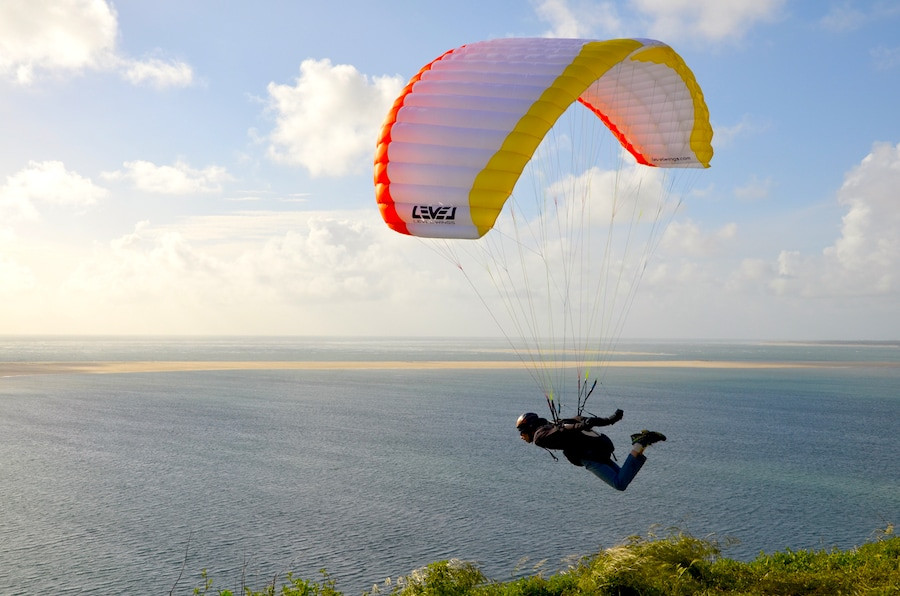
Launching without observing the site invites surprises. Before checking your harness, weather or energy levels, take a few minutes to analyze the ground-wind interface. This step sets a realistic framework for the launch. Conditions shift quickly on a slope, and anticipation is the foundation of piloting. An effective pilot starts by observing, not running.
Wind cycles and dead zones
Relief generates invisible turbulence. An apparent favorable wind can mask gust cycles or sudden decelerations. Watch the grass, smoke or vegetation movement across different parts of the site. Identify where air rises, sinks or creates shear. Without clear indicators, wait for stabilization or adjust your launch angle. Avoid takeoff if the flow is choppy or contradicts general conditions.
Slope, direction and obstacles
Site geometry defines your safety margin. A steep slope increases lift but limits options if something goes wrong. Check the launch alignment relative to the prevailing wind and identify obstacles: power lines, cliffs, trees, other pilots. Setting a landing zone before inflating is standard protocol. If the wind shifts or the slope exceeds your level, recalibrate or step back. Safety comes from anticipated choices and control of the initial phase.
Site reading and safety margins
- Cross-reference weather data with real-time site reading.
- Assess your fatigue and that of pilots in the launch area.
- Select a launch angle that guarantees a possible retreat trajectory.
- Leave ego behind: an unmastered site before launch is an avoidable risk.
The difference between thermal and slope lift affects site management. On technical terrain, spot updraft traces (clouds, dust). If wind blows into the slope face, cycles amplify and landing speed management requires more precision. Read these signs before packing your bag. A secure takeoff is prepared standing up.
Reading a takeoff site means applying a concrete analysis routine to your immediate environment. This method reduces surprises and keeps focus sharp. Stay cautious, progressive and grounded in the site's reality. Use personalized advice to validate your readings before flying solo.
Fly safe,
Cyrille MARCK and the Rid'Air/CEM team