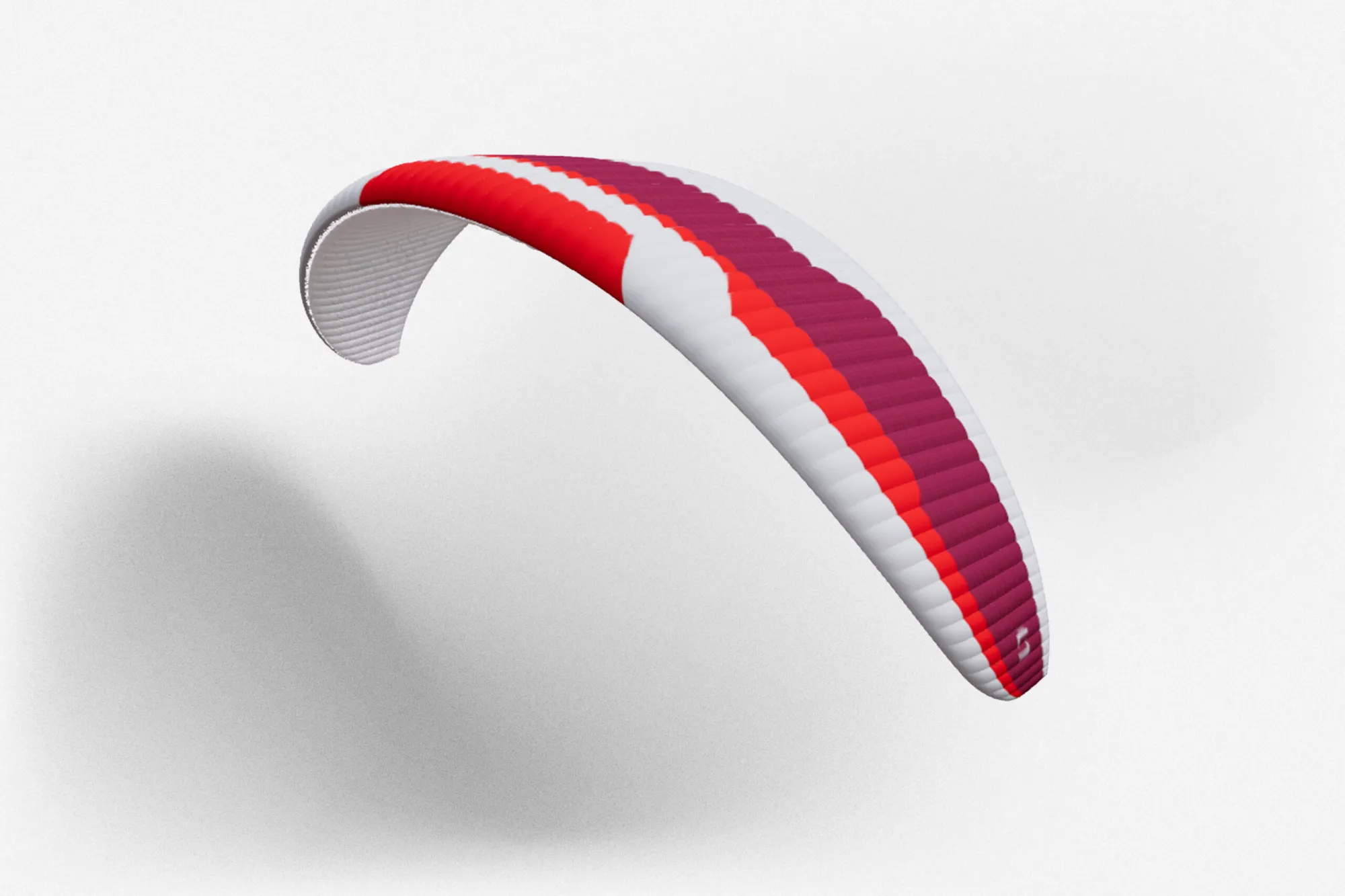
Laminar Flow: The Stable Base
Across Europe, precise atmospheric reading dictates flight quality. Laminar flow refers to smooth air without major turbulence. Lift is stable, speed variations are minimal, and the flight path remains predictable. This environment allows you to work flight lines, refine pitch control, and maintain your trajectory without overloading the wing. Responses are linear, enabling technical and controlled piloting.When the Wind Turns Unstable
The opposite scenario is common and must be identified immediately. Dry gusts, sudden shear layers, or poorly organized waves drastically alter the flight profile. The air strikes hard, the wing reacts violently to relative wind, and corrections become constant. Beyond a certain threshold, physical and mental effort peaks. Progress stops; you start reacting to air movements. The wing absorbs unnecessary loads, and the error margin shrinks drastically.Warning Signs to Monitor
- V vegetation twitching instead of flowing smoothly.
- Lift opening or closing erratically without surface wind changes.
- Visual and cognitive fatigue setting in quickly as the pilot overcompensates.
Rid'Air/CEM Field Advice: Check local weather with reliable tools before flying, strictly adhere to your skill level, and manage fatigue as carefully as wing handling. Prioritize safety margins and avoid exposed ridges if the wind profile is irregular. If air becomes disorganized on the lee side of a slope or in transition zones, land immediately. The terrain and atmosphere demand rigor.
Practical Summary
Soaring session quality depends on flow consistency and terrain analysis. If corrections become constant or focus drops, land the wing or switch sectors. Patience and condition observation always take priority over improvisation.
Fly safe,
Cyrille MARCK and the Rid'Air/CEM team