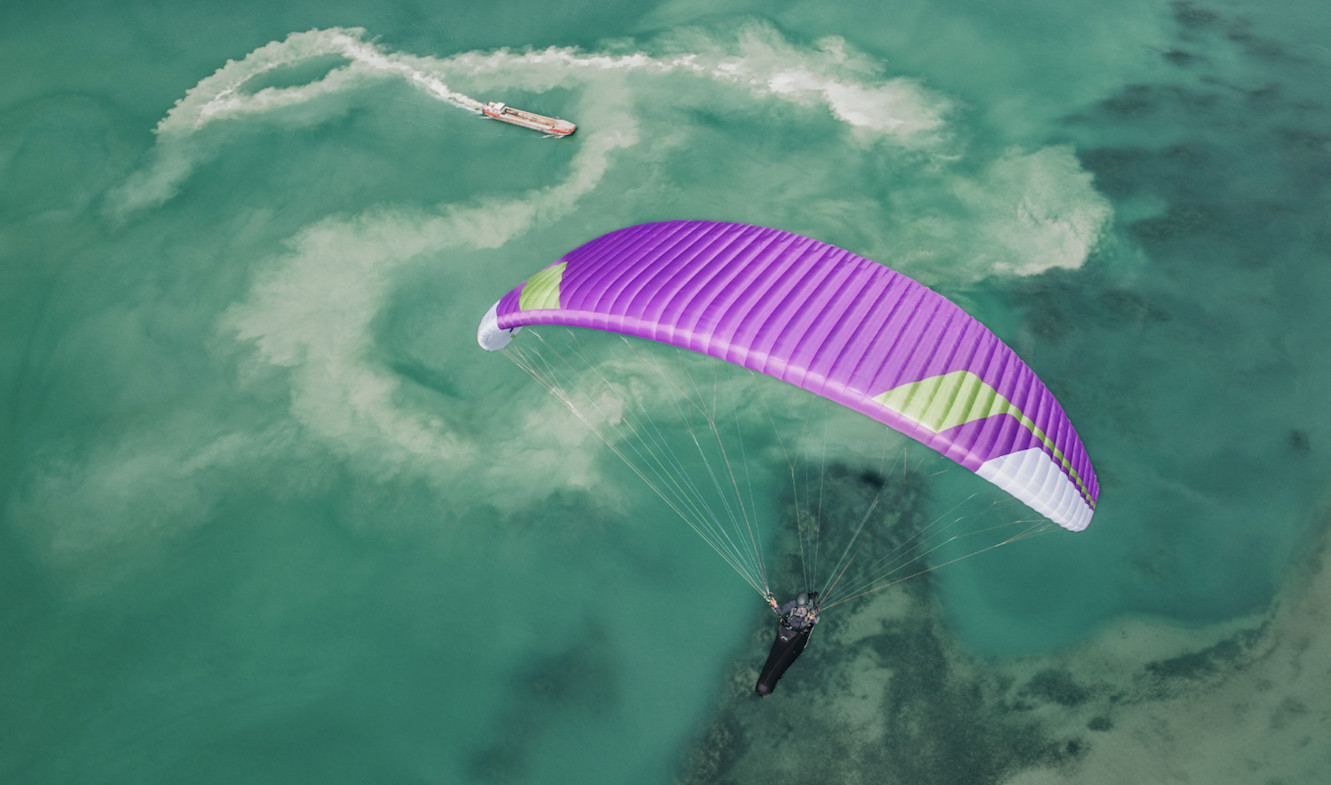
To improve your paragliding comfort and become one with the wing, you have two tools: ground handling and piloting courses in a safe environment. Ground handling, which is essential, will allow you to transform your wing into an extension of your body, just as you don't think when you drive your car.
1. Improved Takeoff Comfort
Takeoff is a key phase in paragliding, and mastered ground handling is crucial for a successful launch. By practicing ground handling, you perfect your technique, whether kiting facing the wing or with your back to the wing. This training allows you to adjust your position, manage line tension, and anticipate the wing's reactions, even in windy conditions. These movements become more fluid with practice, reducing stress and increasing your confidence for calm takeoffs.
2. Improving Your Connection with the Wing
Ground handling helps you develop an intuitive relationship with your wing, transforming it into a natural extension of your body. By manipulating the wing on the ground, you learn to feel its movements, interpret its reactions to the wind, and adjust your actions with precision. This deep connection allows you to anticipate the wing's behavior in flight, strengthening your control and harmony with the equipment.
3. Learning and Perfecting Piloting in Turbulent Air
Practicing ground handling in varied conditions, especially with irregular winds, simulates the challenges of turbulent air. By learning to stabilize the wing against gusts or changes in wind direction, you develop essential reflexes for managing turbulence in flight. This exercise refines your ability to quickly correct wing movements, a valuable asset for navigating safely in unstable conditions.
4. Comfort in Ridge Soaring in Strong Winds
Ground handling effectively prepares you for ridge soaring in strong winds. By training to keep the wing stable and control its pull in strong winds, you gain comfort in managing takeoffs and flights in demanding conditions. This practice allows you to approach windy ridges with confidence, better anticipating the effects of the wind on the wing and reducing the risk of errors.
5. Maintaining Your Skills Off-Season
When weather conditions or the season limit flying opportunities, ground handling is an excellent way to maintain your skills. A few hours spent working on your technique in a suitable field allow you to stay connected to your equipment and keep your reflexes sharp. This regular training, even off-season, ensures that you remain proficient and comfortable during your next flights.
Conclusion
Ground handling is a cornerstone of paragliding progression. By improving your takeoff comfort, strengthening your connection with the wing, perfecting your piloting in turbulent air, preparing for ridge soaring in strong winds, and maintaining your skills off-season, this practice makes you more confident and competent. Grab your wing, find a suitable field, and enjoy ground handling to make your wing a true extension of yourself!