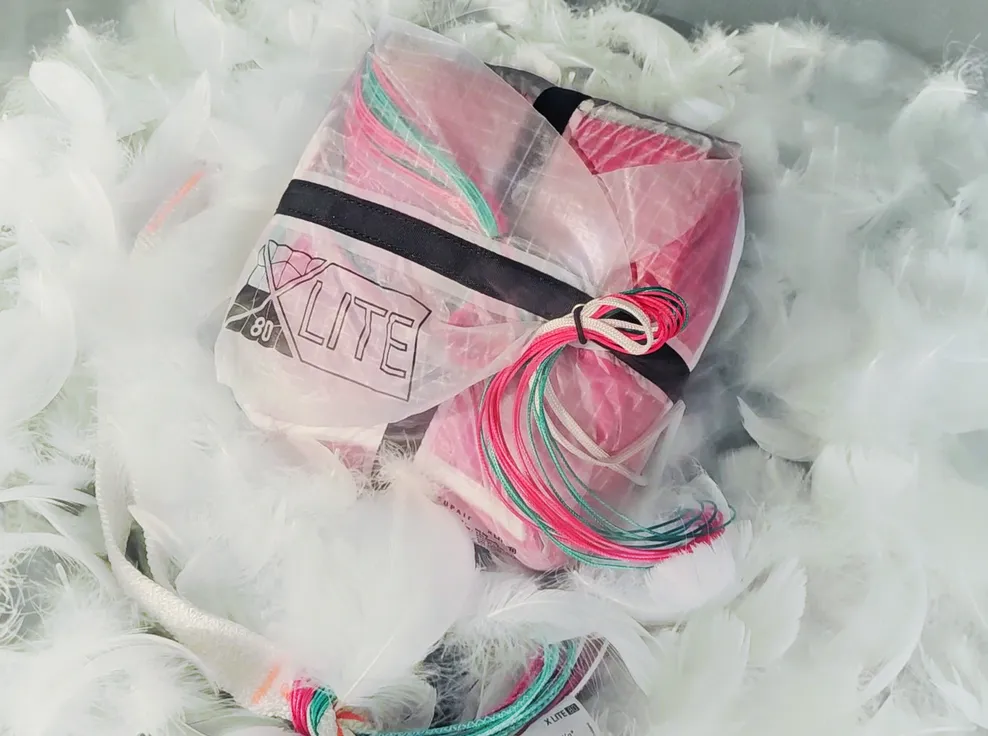
The Wing: Not So Fragile, But Not Invincible
A well-maintained paraglider can last 500 flight hours, sometimes more. But it has enemies: UV rays, humidity, and sand. After each session, store your wing in the shade, never in direct sunlight on launch. And if it's wet, dry it flat in a ventilated area before packing it. I remember a pilot who stored his wet wing in his car trunk for three weeks in summer — the fabric started to mold. The result: porosity destroyed and the wing was good for the bin.
Lines: Check Regularly
Perform a visual inspection of your lines every 20-30 flight hours. Look for knots, damaged sheaths, snags on the lower lines. If a line appears stretched compared to others, it's time to visit the workshop. This is not something to take lightly — line asymmetry changes the wing's behavior.
The Harness: An Annual Check Is Enough
Check load-bearing seams, karabiners (no play, no rust), and the condition of the back protection (foam or airbag). If your airbag deflates too quickly, it needs to be replaced. Leg straps also wear out — inspect the buckles and friction points.
The Reserve: Repack Every 6 Months
This is non-negotiable. A reserve parachute must be repacked by a professional every 6 months. Even if you've never used it. The fabric takes a set, elastics age, and humidity accumulates. A well-packed reserve is a reserve that opens. Our workshop in Oderen handles repacking for all types of reserves, usually within 48 hours.
When to Service Your Wing?
Every 2 years or 200 hours, have a complete inspection performed: fabric porosity, line measurement, seam inspection. We work with manufacturers for service protocols. A preventive check is better than an unpleasant surprise in flight.
➡️ Discover our workshop · Maintenance accessories · Book an appointment for repacking or servicing
Fly safe,
Cyrille MARCK and the Rid'Air/CEM team