The Principle: Every Gram Counts
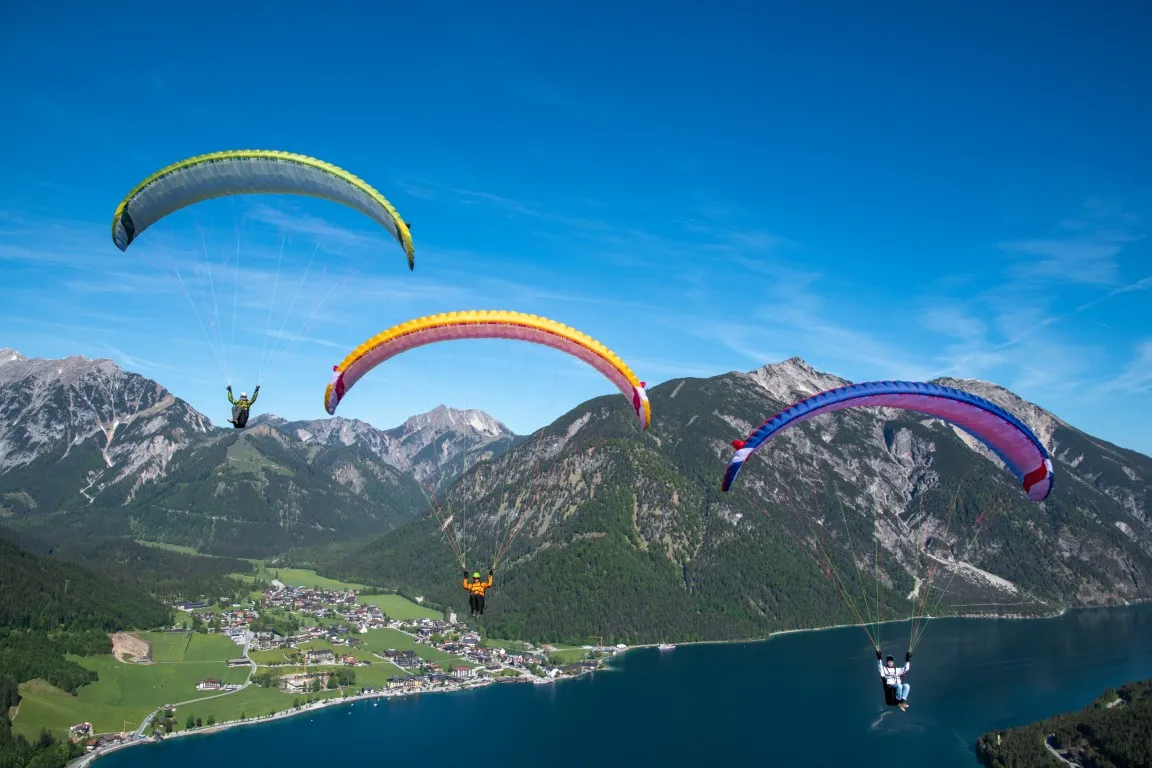
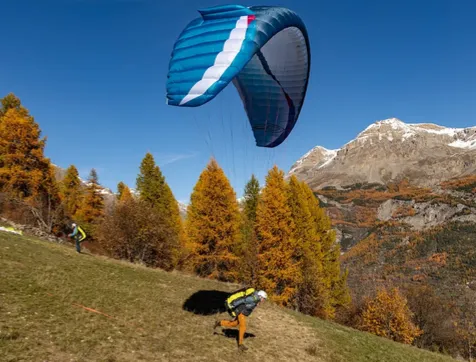
For hike & fly, you carry everything on your back during the ascent. You'll feel the difference between a 5 kg bag and a 12 kg bag after just 500 meters of elevation gain. The market has evolved tremendously in recent years: today you can find wings under 3 kg, harnesses under 2 kg, and reserves under 800 g. A complete hike & fly setup can weigh less than 6 kg — unthinkable ten years ago.
The Wing: Light Doesn't Mean Fragile
Manufacturers use thinner fabrics (Porcher Skytex 27 g/m², Dominico 20D…) and ultra-thin sheathed lines. The result: light, compact wings that fit into a small backpack. Of course, they require a bit more care than a standard wing — no rocky takeoffs, careful packing. But in flight, their behavior is excellent. At Rid'Air, we offer light wings from all the brands we distribute.
The Harness: Reversible or String?
Two schools of thought. The reversible harness transforms into a backpack for the ascent — practical, all-in-one, it's the most popular choice. The string harness (light hammock type) is even lighter but less comfortable in flight. For hike & fly outings with 1 to 2 hours of flight, the string harness works well. For full days with cross-country flying, the reversible harness is more suitable.
The Light Reserve
There are reserves specifically designed for hike & fly, weighing under 800 g. They are smaller, more compact, but their sink rate remains within standards. Never skip the reserve to save weight — that's the one element I don't compromise on.
My Advice as an Experienced Hike & Fly Pilot
I've spent many days in the Vosges mountains climbing the Markstein on foot before flying down. The best investment is a good pair of shoes and a well-fitted backpack. And don't break the bank all at once: start with a light wing, keep your classic harness initially, and upgrade gradually. Hike & fly is a state of mind — not a shopping list.
???? Our Light Wings · Reversible and Light Harnesses · Compact Reserves
Fly safe,
Cyrille MARCK and the Rid'Air/CEM team