Guide Compétition — Gear & advice
Course en circuit, manche de compétition. Performances maximales, pilotage de haut niveau.
Paragliding Competition: What Exactly Is It?
When we talk about paragliding competition, we often think of images of acro with its tumbles or precision landings on a target. But the queen discipline, the one that gathers the most pilots on weekends all over France, is cross-country competition: distance races where you link GPS waypoints as fast as possible. I had the chance to experience the World Cup (PWC) between 2019 and 2021, and believe me, between a Sunday Federal Challenge and an international round, the spirit remains the same : read the sky better than your neighbor, and never land before the finish.
This guide is here to explain how it works, what equipment you need, and most importantly, how to take the plunge without putting yourself in danger. Because competition is first and foremost about refined flying : not a contest of who pushes the hardest.
How a Cross-Country Competition Round Unfolds
In a XC competition event, all pilots take off within a given time window, then cross a start (race start) at a precise time. From there, it's a pure race : you must validate each waypoint of the course in order, then reach the goal (the finish). The track is defined each morning by the race director according to the day's weather.
The formats you will encounter :
- Race to Goal : The most common. Everyone follows the same course, the fastest wins the round.
- Elapsed Time : Each pilot takes their own start, individual course time is recorded. Practical when the sky is temperamental.
- Open Distance : Free distance, aiming to go as far as possible. Rarer in official competitions, but it's the DNA of cross-country.
Your track is recorded by a GPS in IGC format : this file is authoritative for validating your waypoints and your time. No clean track, no score. First lesson for beginners : always check that your instrument is recording before taking off.
Categories : Sport, Serial, and Open
This is THE point that confuses everyone at first. In cross-country competition, pilots are classified according to the type of wing they use, grouped into classes. This prevents comparing a grandmother on an EN-B with a CCC-certified missile.
- Sport Class : Open to wings up to EN-C (sometimes EN-D depending on regulations and countries). This is the ideal entry point. You'll meet many pilots making their first forays on accessible wings here.
- Serial Class : Reserved for the most high-performance production wings, i.e., EN-D and especially CCC (Competition Class Certified). CCC is a specific certification for production competition wings, more demanding in terms of testing.
- Open Class : Prototypes, uncertified wings reserved for the world elite (PWC, World Championships). Forget about it : this is not a place for beginners, nor for 99 % of pilots.
My advice : forget about CCC until you have several seasons of cross-country under your belt. A competition wing is very unforgiving, and in strong thermals, it can put you in the red in a fraction of a second. Performance is useless if you spend the round managing your stress instead of reading the sky.
Competition Equipment
The Wing
The choice of wing depends on your class and, above all, your skill level. We're talking about high aspect ratio (the ratio between wingspan and chord) which provides glide performance but requires active piloting : the higher a wing's aspect ratio, the more performant it is… and the more demanding it is to manage in turbulence.
Here's a comparison of the classes for clarity :
| Class | Certification | Indicative Aspect Ratio | For Whom? | Piloting Demands |
|---|---|---|---|---|
| Sport | EN-B+ à EN-C | ~5,5 à 6,5 | First competitions, confirmed XC pilot | Moderate to sustained |
| Sport / Serial | EN-D | ~6,5 à 7 | Expert XC pilot, high flight volume | High |
| Serial | CCC | ~7 à 7,5 | Experienced competitor, several seasons | Very High |
| Open | Proto (non homologué) | > 7,5 | World elite only | Extreme |
Aspect ratio values are indicative and vary by model : view them as orders of magnitude, not as figures set in stone.
The Harness
In cross-country competition, the pod (cocoon) harness is the norm. You lie down, legs faired in an aerodynamic bag closed by a zipper. This greatly reduces drag and improves the effective glide performance of the setup. The downside : it's less comfortable to get used to, and you need to be comfortable extending your legs when landing. You don't start with a pod without a few hours of adaptation.
Instruments and Reserve Parachute
A good competition vario-GPS displays waypoints, optimizes your route, manages the IGC track, and gives you the day's flight plan. On the safety side, a well-maintained reserve parachute is not an option : on high-performance wings and in strong thermals, it's your last resort. At the Rid'Air workshop, we pack and inspect reserve parachutes all year round — an annual repack is fundamental, and it's best done calmly during the winter break.
Pilot Requirements
Competition isn't just about equipment. The real engine is you. Before signing up, make sure you have :
- Solid cross-country experience : ideally several hundred hours of thermal flying, with real cross-country flights logged (not just gentle soaring above the takeoff).
- A recent SIV course : knowing how to manage an asymmetric collapse, a frontal collapse, an autorotation, recovering from a stall… This is non-negotiable on higher-performance wings. If your last piloting exercises date back to your license, it's time to go back over the water.
- Comfort in turbulent air and managing terrain : rounds are rarely flown in calm air.
- Mental management : knowing when to give up. The best competitor isn't the most reckless, it's the one who returns safely every season and scores points regularly.
A little anecdote : during one of my first PWC rounds, I had a perfectly capable wing, but I spent the day tense, managing collapses instead of looking for good thermals. Result : landed well before the goal, watching my friends continue. The lesson : a wing you don't fly with 100 % confidence will cost you more time than it will save you. Progress step by step.
How to Start Competing : The Rid'Air Roadmap
- Fly, fly, fly. Accumulate cross-country flights on your current wing, ideally an EN-B+ or EN-C that you master perfectly. No need to change wings for your beginnings.
- Do one (or two) SIV courses. This is a competitor's life insurance. We cannot stress this enough.
- Sign up for a regional event in the Sport class : Federal Challenge, regional cups. The atmosphere is friendly, and you learn a lot during briefings.
- Join a club or find a mentor. Flying with more experienced pilots helps you progress ten times faster than flying alone.
- Upgrade your equipment gradually. Move up one step at a time, never two. Sport before Serial, EN-C before EN-D, a well-digested EN-D before thinking about CCC.
To choose your next wing according to your level, check out our comparisons by certification : EN-B and EN-B+ for consolidation, EN-C to switch to Sport class, EN-D and CCC serial class when you truly have the experience. And before you start racing, (re)read our cross-country guide and our thermal flying guide : competition is optimized cross-country, nothing more.
Our Recommendation
At Rid'Air, we know competition from the inside — not just from behind the counter. We'll guide you towards the right equipment for your actual skill level, not towards the most expensive wing. If you're just starting, we'll tell you frankly : keep your EN-C for another season and invest in an SIV instead. And the day you're ready for a CCC, we'll be there, with the best market price and a workshop to pack your reserve.
Need personalized advice to build your competition season ? Browse our shop, or contact us : we take the time to discuss your project. Today, the major brands no longer make mistakes, and their wings are all very polished. What matters most is having a wing that fits your size and your level.
Fly safe,
Cyrille MARCK and the Rid'Air/CEM team
Recommended gear for compétition
Ozone Zeno 2
Ozone Photon
Ozone Zeolite 2
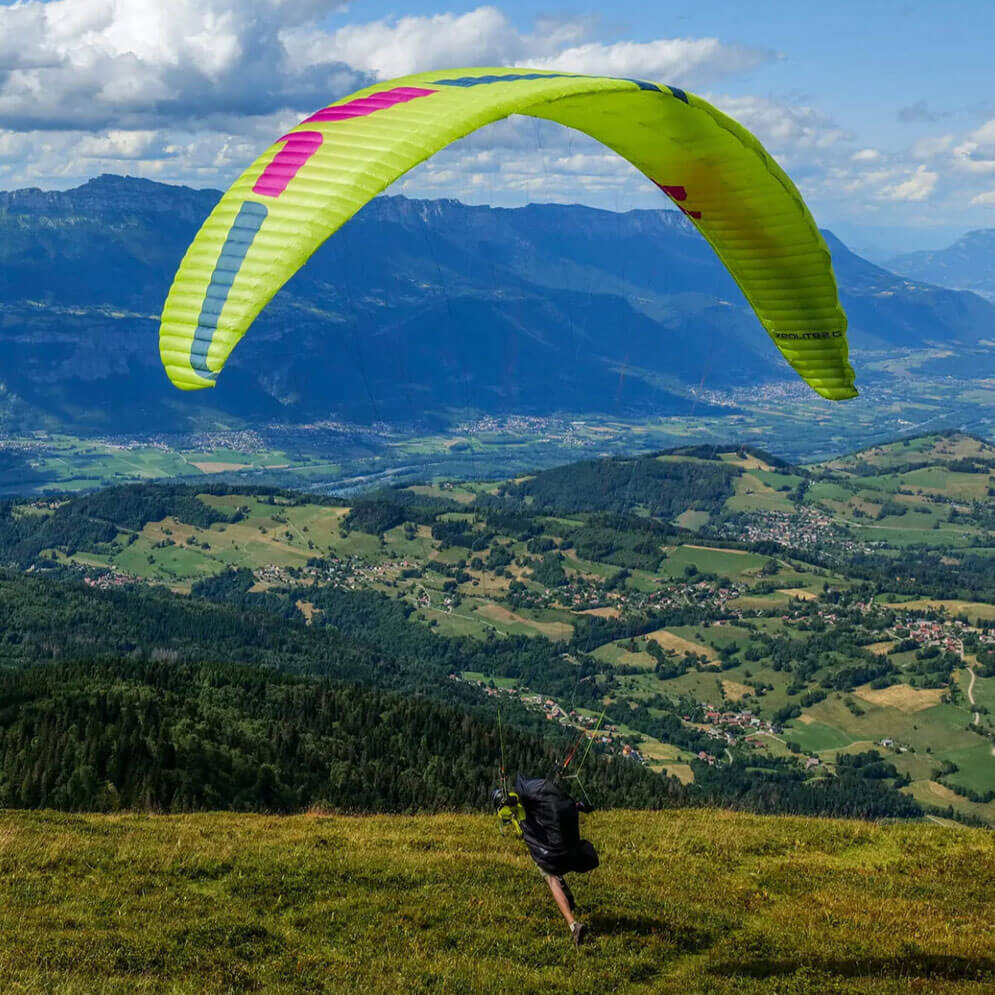
Ozone Zeolite 2 GT
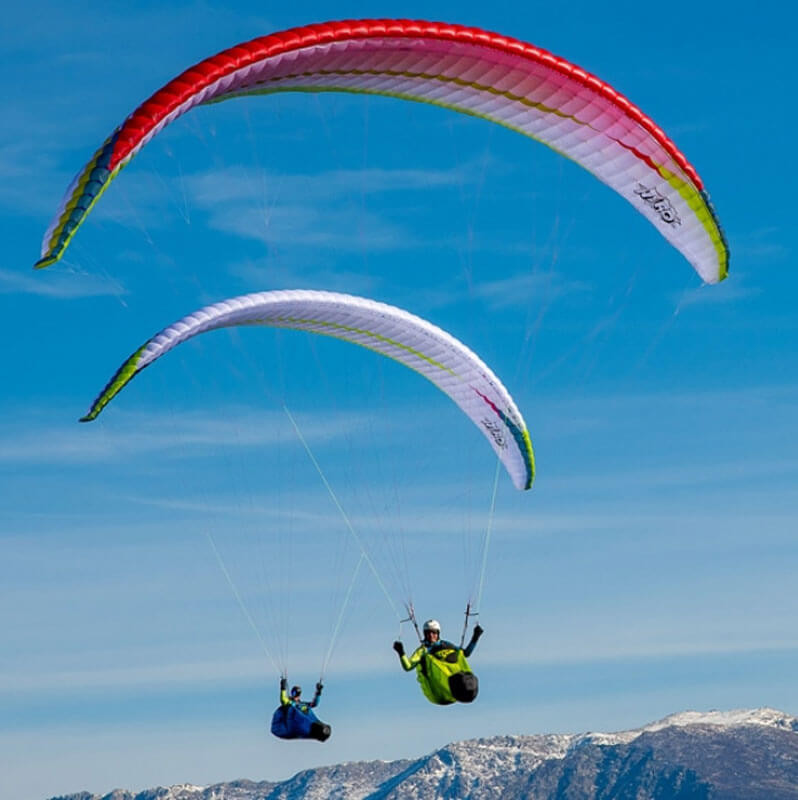
Air Design - Hero 2
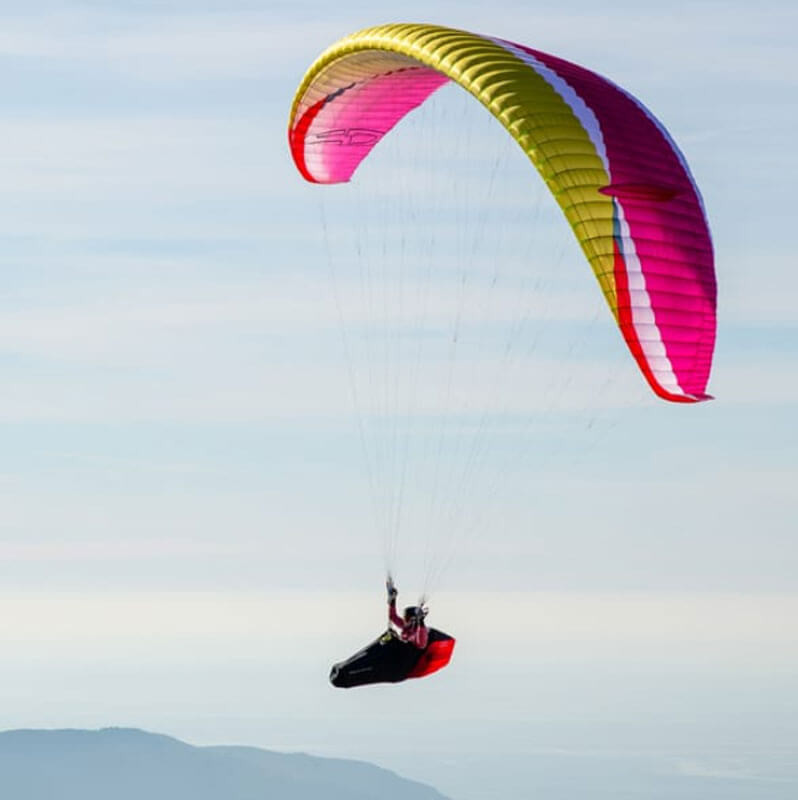
Air Design Rise 5
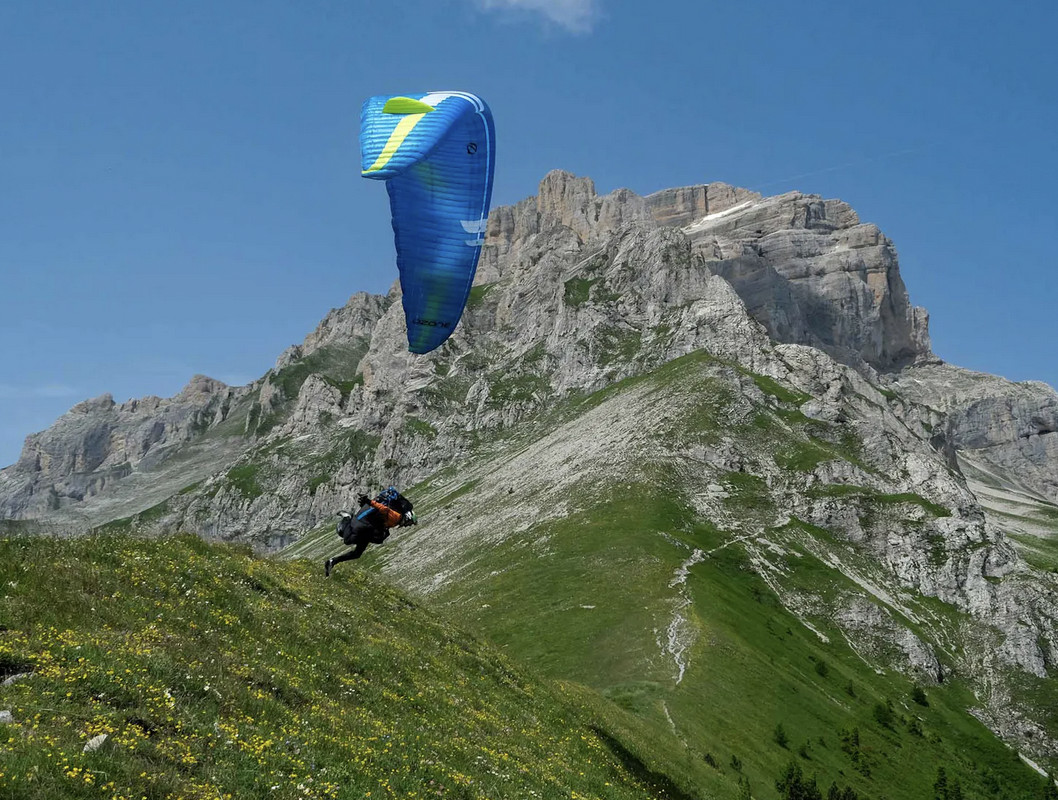
Ozone Lyght
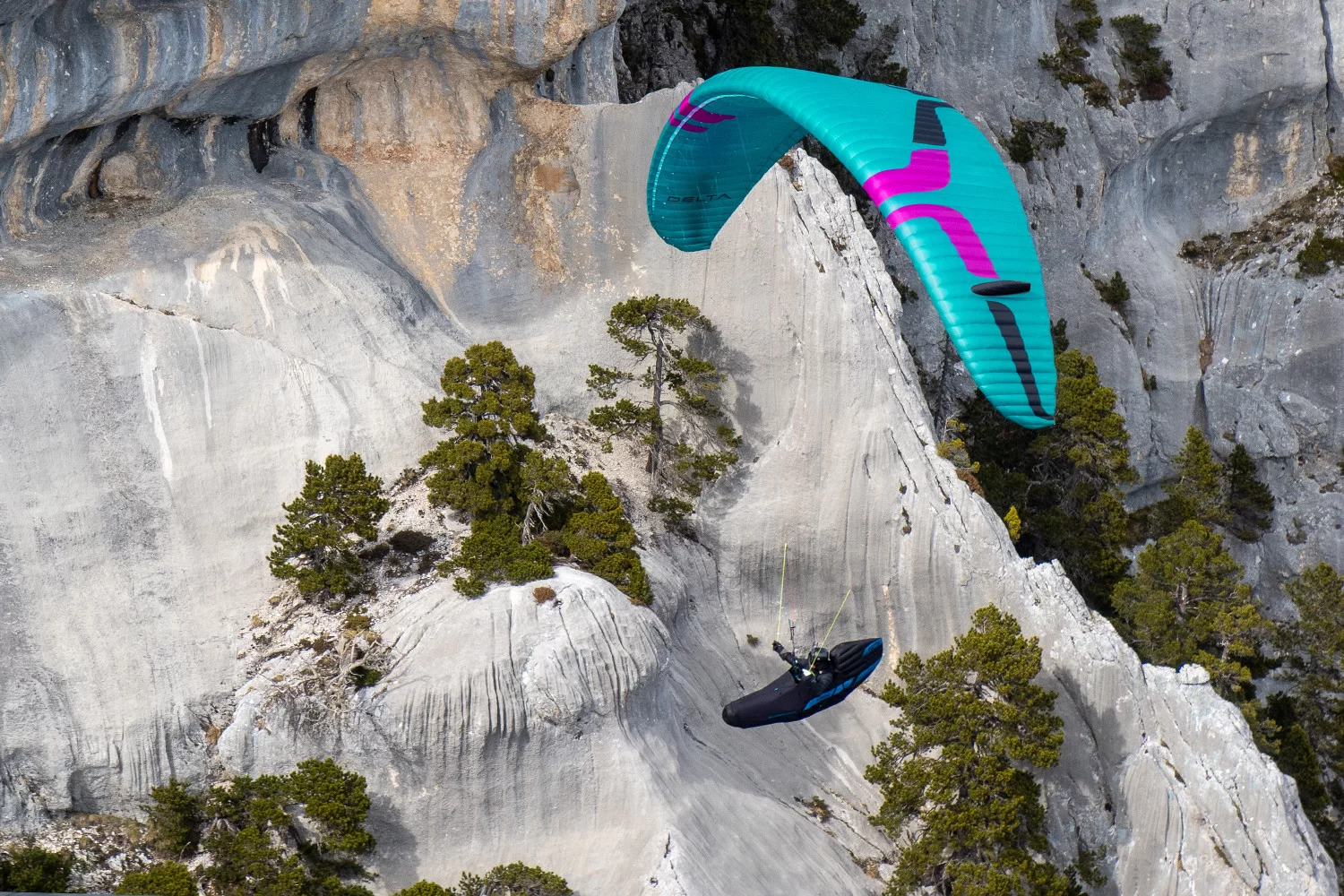
Ozone Delta 5

Niviuk Artik R 2
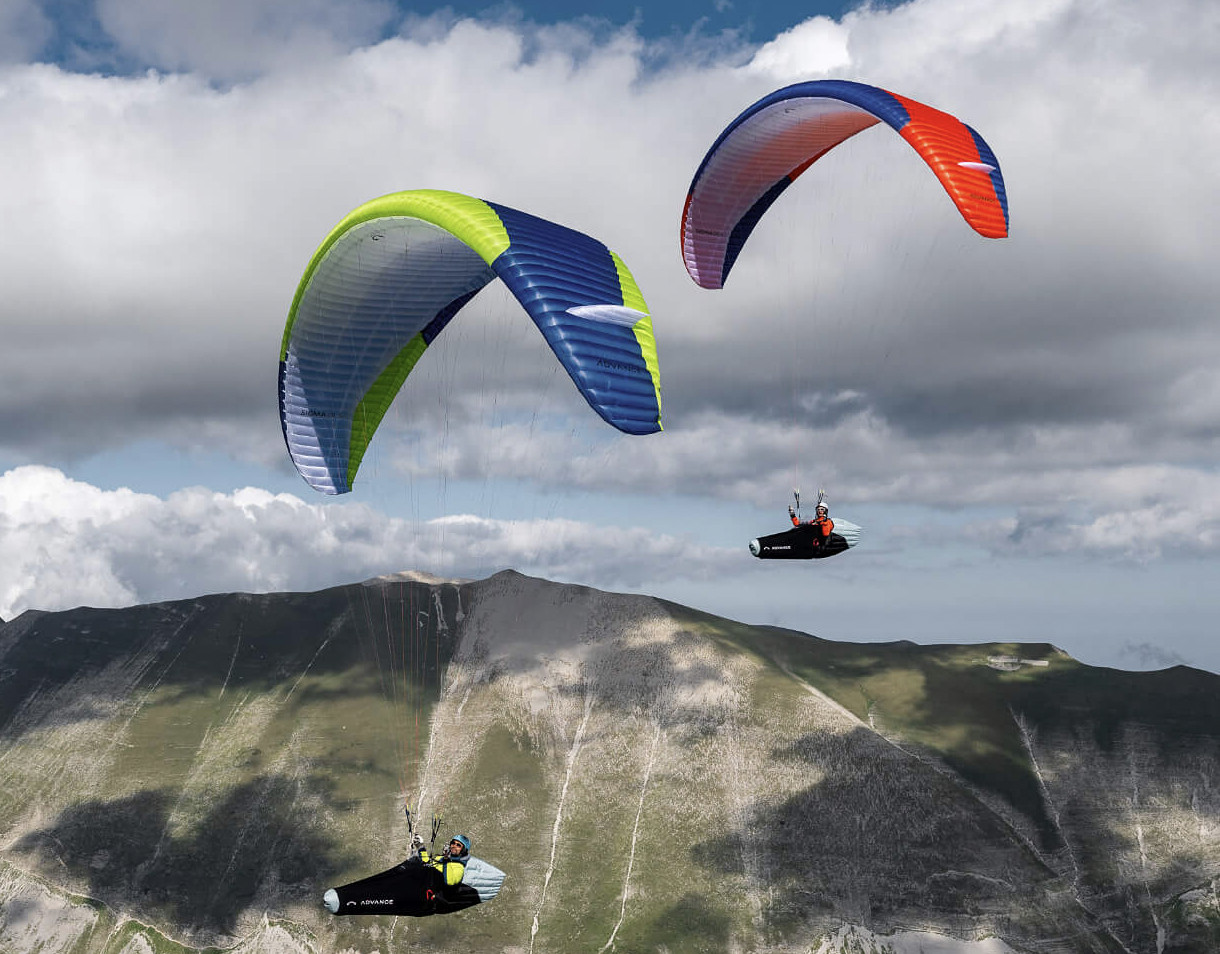
Advance Sigma DLS