Some pieces of gear sneak in through the side door and end up turning everything upside down. The parawing is exactly that. In the space of a few seasons, this little scrap of fabric with not a single inflatable structure has gone from a curiosity to a genuine riding tool. And believe me, when you grow up with a wing over your head like I did at the Markstein, you look at this thing with a knowing smile: there is something very familiar about it.
So what exactly is a parawing?
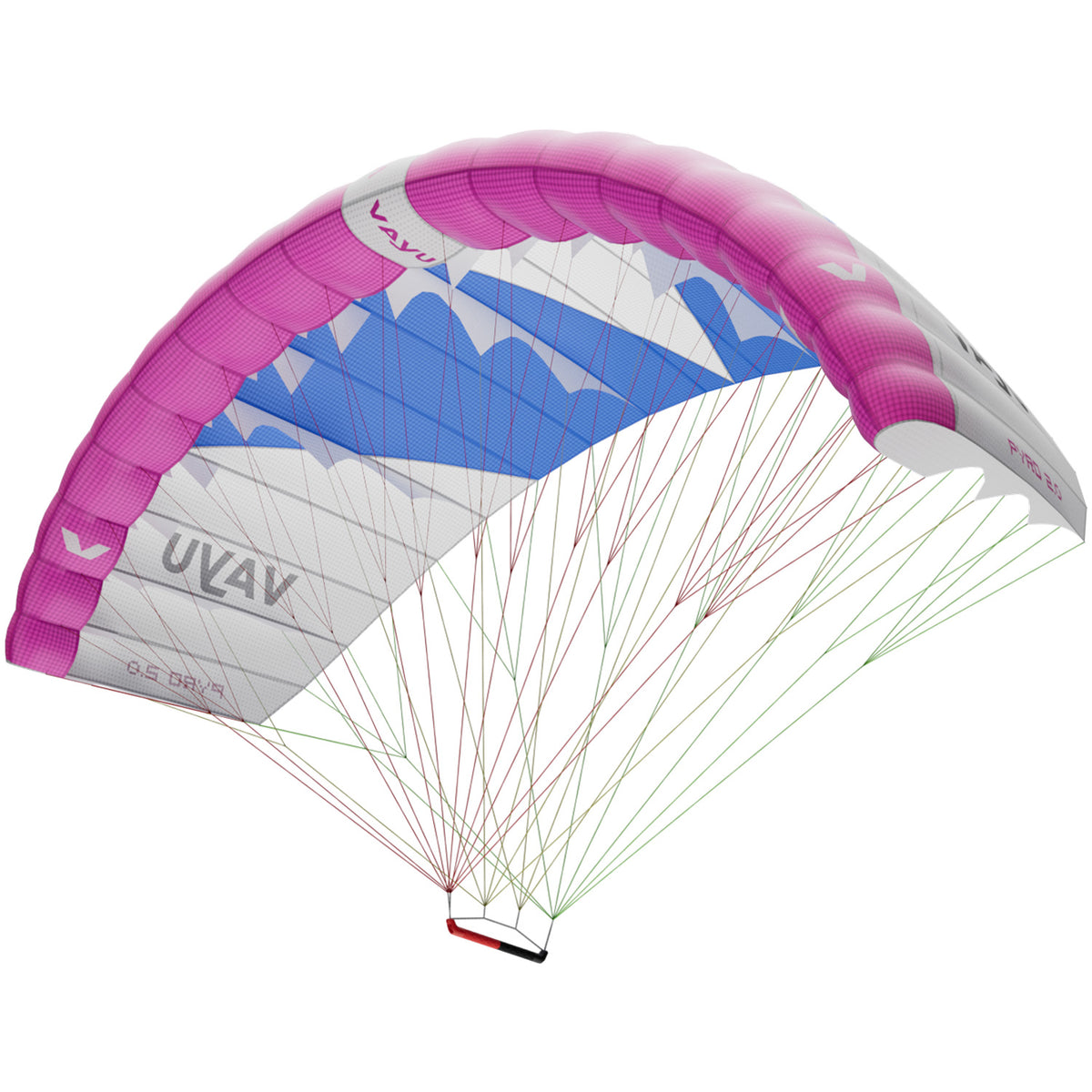
A parawing is a soft wing, with no inflatable strut, that you fly directly off the lines (or via short handles attached to the lines). No pump, no rigid leading-edge strut to inflate: you deploy the fabric, the wind gives it shape, and you get pulled along. In practical terms, it is an ultra-minimalist traction wing, halfway between the wingfoil wing and the paragliding mini-glider.
The big selling point, the one that makes everyone's eyes light up: it packs down tiny. A classic wing, even deflated, stays bulky. A parawing crushes down into a bag the size of a sweater. You can stow it in a vest pocket, slip it into a hiking backpack, or hold it in one hand while you paddle on the board. It is this compactness that changes everything.
Halfway between the wing, the kite and the mini-glider
If you come from wingfoiling, think of the parawing as a wing with the skeleton removed. No more strut to hold it open, so it is lighter and more packable, but also a different way of flying: it is the pull on the lines that gives it shape and control. If you come from kiting, the act of managing a wing at the end of lines will feel instantly natural, without the constraining wind window or the long lines.
And if you are a paraglider pilot — this is where it gets fun — you are quite literally holding a mini wing in your hands. The fabric taking shape under the airflow, the feedback through the lines, the response when you load it up: you know all of that by heart. To place each piece of gear in relation to the others, I broke down the differences in my guide wing vs kite vs parawing.
Who is it for, and what is it for?
The parawing really shines in two disciplines.
- Downwind: running with the wind, surfing the bumps, and deploying the parawing only when you need a little burst of traction to pick up speed again or reach the next set. The rest of the time, it sleeps in your pocket. It is the dream tool for the downwinder who does not want to be weighed down.
- Exploration: hike-and-ride, out-of-the-way spots, long sessions where you string together walking, paddling and flying just above the water. The parawing's compactness makes it an ideal adventure companion — exactly the hike-and-fly spirit paraglider pilots love, but transposed onto the water.
It is not a tool for the complete beginner: it already calls for a bit of ease on the foil and a good read of the water. For a wingfoiler or a kitesurfer who already has the basics, though, it is a wonderful gateway to new sensations. If you are only just starting out, I would point you to my guide getting started in wingfoil before you dive into this.
Why it speaks so strongly to paraglider pilots
I'll be honest: the first time I picked up a parawing, I had a sense of déjà-vu. The feel of the fabric, the way the wing comes under pressure, the dialogue through the lines — that is our mother tongue, for us paraglider pilots. Thirty years of flying above the Markstein leaves you with reflexes: you feel a wing come alive in your hands before you even start thinking.
The parawing is a bit like paragliding meeting board sports. The aeronautical rigour of soft-wing flying, reading the wind, managing pressure — all of that transfers naturally. Many of the pilots I meet at the shop are paraglider pilots who were after a summer toy, on the water, that would not betray their free-flight sensations. The parawing ticks the box. There is no rigid structure between you and the air: just fabric, lines, and wind. It is disarmingly simple, and that is precisely what wins people over.
Ozone and Vayu: who does what
At Rid'Air, we work with brands that have soft-wing culture in their genes — and as luck would have it, that is exactly the parawing's playground.
Ozone ticks every box. The team, based in Raglan, New Zealand, designs kites and wings according to the famous "riders building kites for riders" philosophy. Their R&D comes out of the paragliding and foil-kite departments, which is to say precisely the dual expertise a good parawing demands: mastery of the soft wing and of traction. Their parawing, the Pocket Rocket, lives up to its name beautifully — a name that sums up the whole spirit of the discipline: it fits in your pocket, and it sends it.
Vayu, the German brand based in Kiel on the Baltic, also plays its part in this niche with its Pyro parawing. Vayu is a house that breathes wingfoil from the first stitch to the last, with ranges of wings and boards designed for the Baltic and its rugged conditions. To explore the brand's full world, take a look at the Vayu page.
I'm not going to throw specs or prices at you here — first because this gear is evolving fast, and second because the up-to-date characteristics are something you see in the shop. But if you want to compare sizes and uses, browse the wings category and ask us for advice.
My Rid'Air advice
The parawing is not here to replace your wing or your kite. It is a third tool, a complementary one, that opens up playgrounds the other two reach poorly: light downwind, exploration, the spur-of-the-moment session where you do not feel like lugging three kilos of kit around. Think of it as the board-sport version of the mini-glider: minimalist, playful, and devastatingly effective in its niche.
If you are already comfortable on the foil and you are after a new buzz — especially if you come from paragliding — now is the perfect time to give it a go. The discipline is young, the gear is maturing fast, and the sensations are unique. As always, no need to rush onto the latest trend if you have no use for it: keep your money until the need is there. But if the exploration bug is itching, the parawing will speak to you.
Want a clear picture of the size that suits your weight, your stretch of water and your program? Come and see our wings and parawings in the shop, or contact us for personalised advice: we take the time to understand your project before pointing you anywhere. And if you are passing through Alsace, the Oderen workshop is open to you.
Frequently asked questions
What is a parawing?
A parawing is a soft traction wing, with no inflatable strut, that you fly directly off the lines. You deploy it without a pump, the wind gives it its shape, and it packs down tiny. It is a piece of gear halfway between the wingfoil wing and the paragliding mini-glider.
What is the difference between a parawing and a classic wing?
A wing has an inflatable strut that holds it open and rigid; a parawing has no structure at all and is flown solely off the lines. The result: the parawing is lighter and far more compact, but calls for a different way of flying, closer to the soft wing.
Is the parawing meant for beginners?
Not for complete beginners. It already calls for good ease on the foil and a sound read of the water. For a wingfoiler or a kitesurfer who has the basics, though, it is an excellent gateway to downwind and exploration.
Why does the parawing appeal to paraglider pilots?
Because it reproduces the soft-wing sensations that paraglider pilots know by heart: the fabric coming under pressure, the dialogue through the lines, reading the wind. The parawing is a bit like paragliding meeting board sports, with no rigid structure between the pilot and the air.
Which parawings can you find at Rid'Air?
Rid'Air carries the Pocket Rocket from Ozone, the New Zealand brand born out of the paragliding and foil-kite worlds, and the Pyro from Vayu, the German wingfoil specialist. The up-to-date sizes and characteristics can be checked directly in the shop.
What is a parawing used for in downwind?
In downwind, you surf the bumps under your own power and only deploy the parawing to pick up speed again or reach the next set. The rest of the time, it stays stowed in a pocket thanks to its compactness. It is the ideal tool for the downwinder who wants to travel light.
Fly safe,
Cyrille MARCK and the Rid'Air/CEM team