"Cyrille, which size should I get?" It's probably the question I get asked most at the workshop. And the honest answer is: it depends on your weight and the wind you usually have. The good news is that once you understand the logic, picking your wing size becomes simple and repeatable. Here I'll share the method I apply every day, built on more than thirty years of free flight and my work as an instructor at the Markstein.
The basic rule: wing size is chosen in m²
A wing is measured in square metres of surface area (m²). The larger the surface, the more power the wing captures from the wind; the smaller it is, the more lively, manoeuvrable and suited to strong wind it becomes. The whole game is matching that surface to two variables: your all-up weight and the strength of the wind at your spot.
Keep this simple idea in mind: the heavier you are, the more surface you need for the same wind; the stronger the wind, the smaller you go. It's exactly the same reasoning as in paragliding with weight ranges, except here you adjust it yourself by switching wings to match the day's conditions.
All-up weight, your starting point
In wingfoiling, all-up weight is you, kitted out, plus your gear: the board, the foil, the wetsuit, the impact vest, the helmet. When it comes to wing sizing, it's mainly your body weight that counts, because that's what determines how much power you need to get up on the foil.
A light rider will make do with a smaller surface for the same wind range as a bigger rider. It makes sense: less mass needs less power to fly. Conversely, a larger build will need more surface to get up on the foil in light air. It's not about skill level or machismo: it's physics.
The wind, the second variable
The wind is the fuel. Every wing has a wind range within which it's usable: too little wind and you don't get going; too much wind and the wing becomes unmanageable, you're overpowered. Between the two lies the sweet spot, where the wing pulls you along just right.
A few rules of thumb to set the scene: people often talk about light air around 12-15 knots, comfortable conditions around 15-22 knots, and steady wind beyond that. But these figures shift depending on your weight, your board, your foil and your skill level. A beginner needs a bit more wind (or surface) to get going than an experienced rider who knows how to pump efficiently. That's part of experience too: you learn to make the most of less wind.
How I actually reason it out
Here's the approach I recommend, step by step:
- Start from your weight and the dominant wind range at your spot. If you mostly ride in moderate wind, that's the condition that guides your first wing.
- Pick a "central" wing first, the one that covers your most frequent condition. That's the one you'll bring out most often, so it pays to get it right.
- Think in wind ranges, not absolute surface. A wing that sounds "big" on paper can be perfect for you if you're light or if your spot rarely blows hard.
- Accept that you'll pump a little. At first, going slightly more generous on surface makes it easier to get up and stay on the foil. You fine-tune downwards with experience.
The advice I repeat to my students: don't chase the tiny wing. A properly sized wing is what gets you progressing fast and out on the water often. A wing that's too small "to look pro" leaves you stuck on the water on the average days.
The quiver: why two or three sizes are enough
A single wing never covers every condition. That's where the quiver comes in: a small collection of wings in different sizes that overlap just enough to cover a wide spread of wind.
My old-hand advice: start with one wing, the one for your central condition. Then, once you're really hooked, add a second size above (bigger, for light air) and/or one below (smaller, for strong wind). With two or three well-spaced wings, you cover the vast majority of the year's sessions. Beyond that, you're into the refinements of the dedicated enthusiast or the racer.
The trick is the spacing. Two wings too close in surface overlap pointlessly; two wings too far apart leave a gap where neither is comfortable. A good quiver is a clever overlap where the top of one wing's range meets the bottom of the next.
The gear around the wing matters too
Wing size can't be reasoned in isolation. Your board and your foil have a huge influence on take-off. A generous front foil wing gets you out of the water with less wind and, paradoxically, lets you use a slightly smaller wing. Conversely, a very speed-oriented foil will demand more commitment. Think of the combo as a whole: wing + board + foil form a system. To dig deeper into foils, I'll point you to my guide the foil explained for wingfoiling.
And what about the brands?
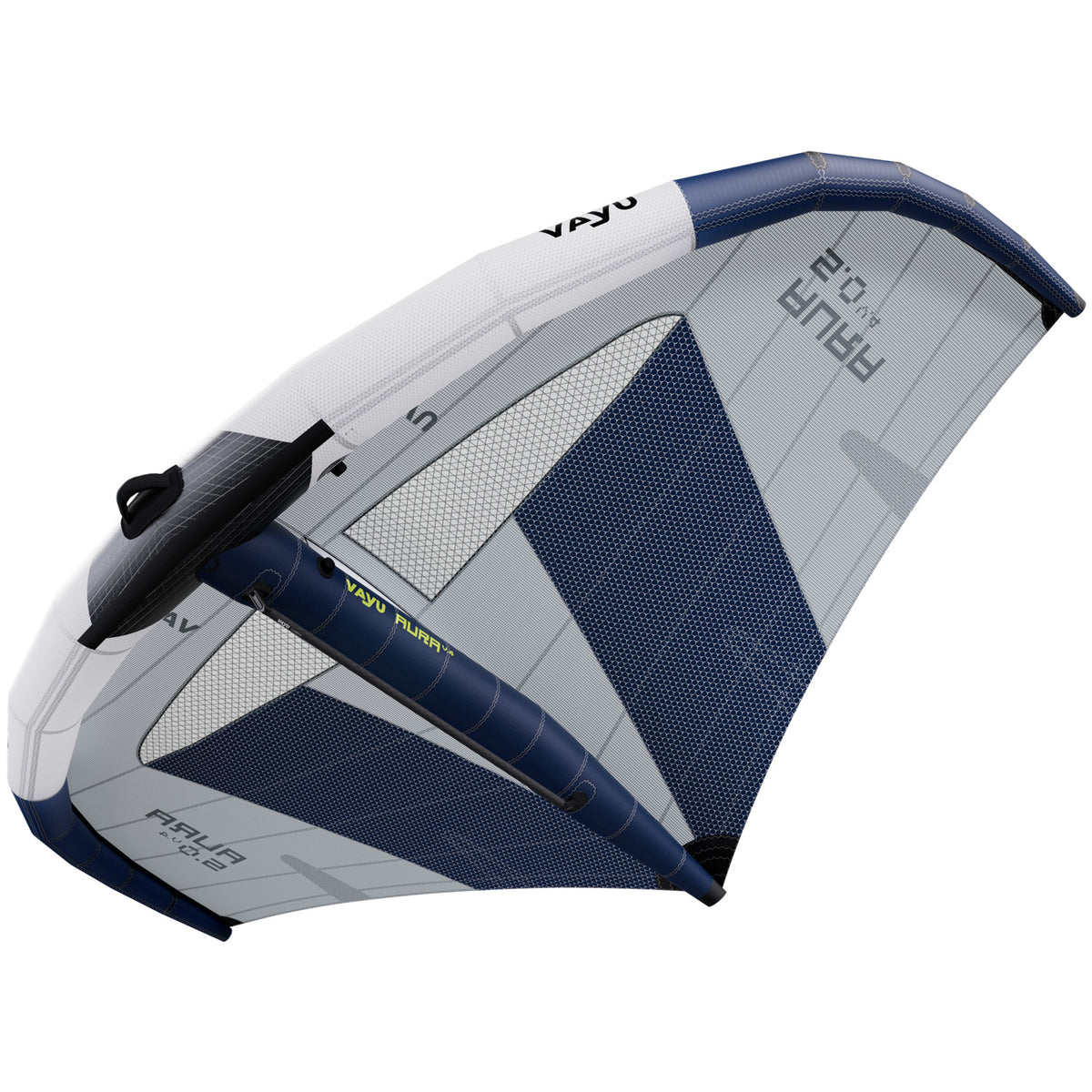
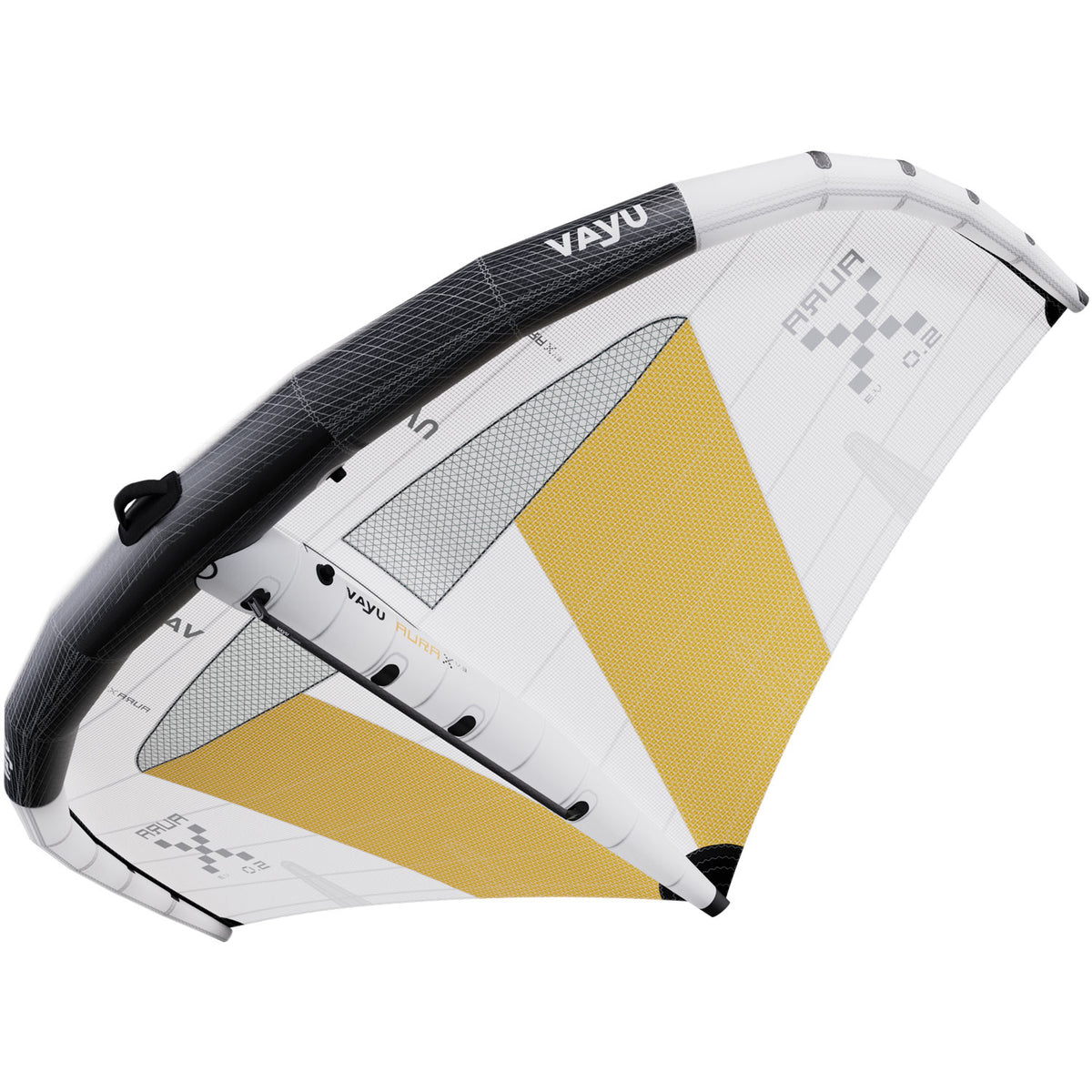
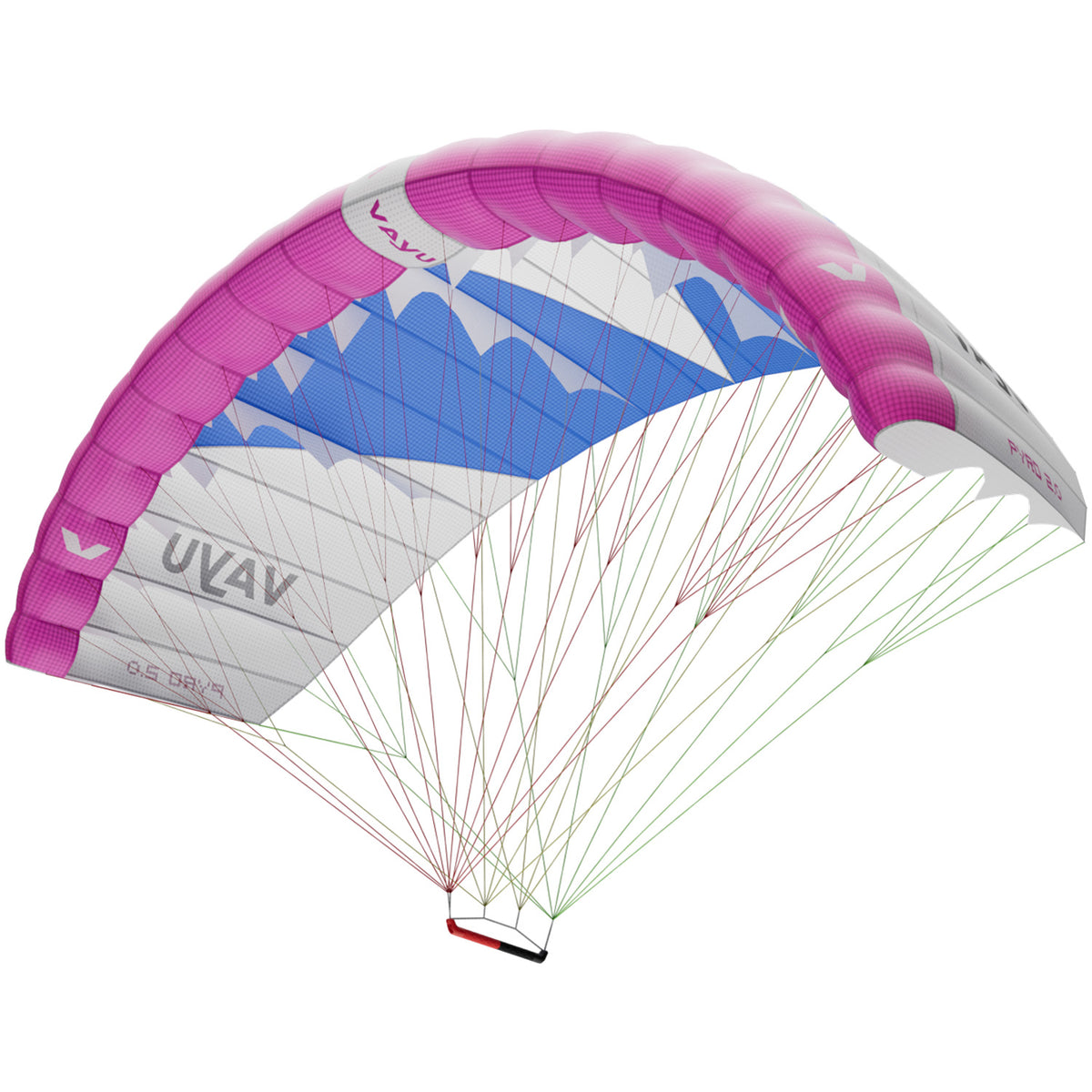
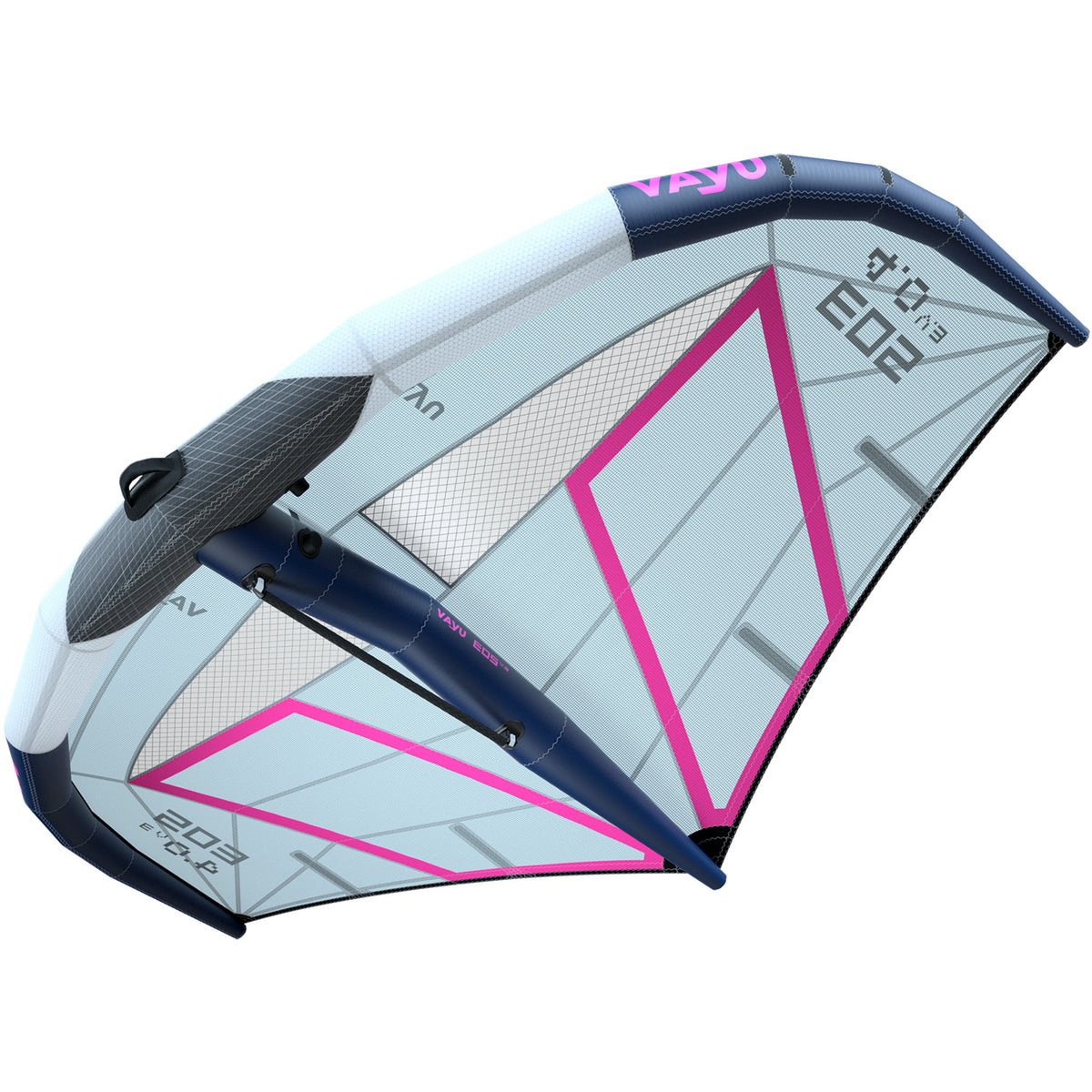
At Rid'Air, we work with brands whose quality I know and stand behind. Vayu, a German brand based in Kiel on the Baltic, offers several wing ranges (Aura, Eos, X Race) designed for different uses, from all-round to race. Appletree, the Dutch crew from the apple-orchard workshop, are specialists in carbon boards, which round out your wing choice perfectly. And Ozone, with R&D rooted in paragliding and foil kiting, brings real mastery of the soft profile.
For exact surfaces, manufacturer wind ranges and the precise specs of each model, I invite you to check the up-to-date specs in the shop: they evolve from one model year to the next, and I'd rather you have the right info than a figure frozen in an article.
The Rid'Air take
If you're starting out, don't drown in the tables. Give me your weight, your spot and the wind you most often find there, and we'll size your first wing together in two minutes. That's exactly the kind of personalised advice I've never wanted to hand over to an algorithm: a rider talking to a rider. And if you're truly starting from scratch, take a look at my guide getting started in wingfoiling to lay the foundations before choosing your gear.
Need to get your quiver sorted? Browse our selection of wings, discover the Vayu range, or contact us for personalised advice: I'll steer you towards the right size for your weight and your spot, without pushing you to buy what you don't need.
Frequently asked questions
How do you choose your wing size?
Wing size, measured in m², is chosen by combining two variables: your weight (all-up weight) and the strength of the wind at your spot. The heavier you are, the more surface you need for the same wind; the stronger the wind, the smaller you go. You start from your most frequent wind condition to pick your central wing.
What is all-up weight in wingfoiling?
All-up weight is the total flying weight: you, kitted out, plus your gear (board, foil, wetsuit, impact vest, helmet). To size a wing, it's mainly your body weight that guides the choice, because it determines the power needed to get up on the foil.
How many wings do you need?
Just one wing to start, the one for your most frequent wind condition. As you progress, two or three well-spaced sizes (a bigger one for light air, a smaller one for strong wind) cover the great majority of the year's sessions.
Should you get a bigger wing when starting out?
Yes, it's often a good idea. A slightly more generous surface makes it easier to get up and stay on the foil while you build your pumping technique. You fine-tune down to a smaller size with experience, once you know how to make the most of less wind.
What's the wind range for wingfoiling?
As a rough guide, you often ride from around 12-15 knots, with a comfortable zone around 15-22 knots. These markers vary with your weight, your skill level, your board and your foil. Every wing has its own usable wind range, to be checked against the specs in the shop.
Do the board and foil influence wing choice?
Yes, a great deal. A generous front foil gets you out of the water with less wind and sometimes lets you use a slightly smaller wing. Wing, board and foil form a system: you have to reason about the whole thing, not the wing on its own.
Fly safe,
Cyrille MARCK and the Rid'Air/CEM team